Boulder Sports Clinic

Shockwave Therapy
in Boulder, CO

Advanced, Non-Surgical Treatment for Chronic Tendon & Joint Pain

Shockwave therapy is a non-invasive treatment that uses high-energy acoustic waves to stimulate healing in injured tendons, muscles, and other soft tissues.

learn more
rating-stars
300+ 5 star reviews
shockwave therapy boulder
learn more about

What is Shockwave Therapy

Shockwave therapy is a non-invasive treatment that uses high-energy sound waves to stimulate healing in injured tendons, muscles, and other soft tissues.

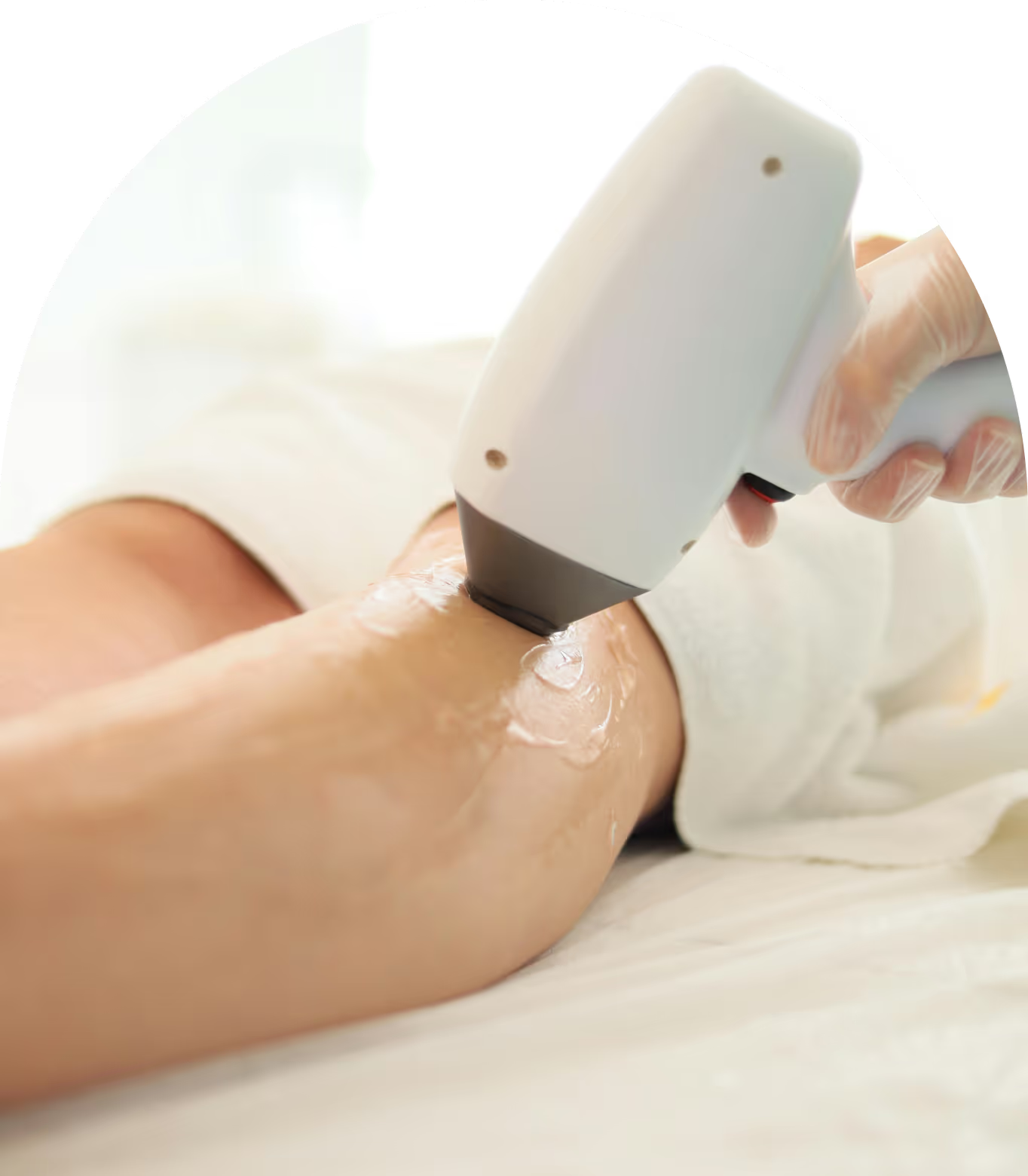
These sound waves are delivered through the skin to the affected area using a handheld device. When tissues become chronically irritated or overloaded, the body’s normal healing process can slow down.

Shockwave therapy is designed to help restart this healing response by increasing blood flow, stimulating cellular repair, and encouraging the body to break down damaged tissue so it can be replaced with healthier tissue.

In our clinic, shockwave therapy is often combined with other treatments — such as rehabilitation exercises or manual therapy — to help restore normal tissue function and reduce pain.
book your appointment

Injuries Treated with Shockwave Therapy:

list-icon
Plantar Fasciitis: Pain along the bottom of the heel or foot caused by irritation of the plantar fascia. Shockwave therapy is frequently used for chronic cases that haven’t responded to stretching or orthotics.
list-icon
Achilles Tendinopathy: A painful tendon condition common in runners and athletes who increase training volume quickly.
list-icon
Tennis or Golfer's Elbow: Pain along the outside or the inside of the elbow caused by irritation of the forearm tendons.
list-icon
Rotator Cuff Pain: Pain when raising or rotating the arm, often related to inflammed shoulder muscles.
list-icon
Patellar Tendinopathy (Jumper’s Knee): Pain in the patellar tendon below the kneecap, common in jumping and running sports.
list-icon
Hamstring Tendinopathy: Pain in the upper hamstring near the sit bone, commonly seen in runners and athletes who sprint.
EPAT therapy
Advanced Therapies

Shockwave Therapy
in Boulder, CO

If you’re dealing with persistent pain that hasn’t improved with rest, exercise, or traditional therapy, shockwave therapy may be the missing piece.

At Boulder Sports Clinic, we offer advanced shockwave therapy in Boulder to help patients reduce pain, stimulate healing, and return to activity — without injections or surgery.

Shockwave therapy is especially effective for chronic tendon injuries and stubborn pain that hasn’t responded to other treatments.

📍 Helping Boulder, Longmont, Louisville and Surrounding Area
📅 Same-Day appointments often available

Get in touch

Quick Answer: What Is Shockwave Therapy and Does It Work?

Yes. Shockwave therapy is a non-invasive treatment that uses acoustic sound waves to stimulate healing in injured tissue. It works by increasing blood flow, breaking down unhealthy scar tissue, and triggering the body’s natural repair process. Research supports its use for bone healing, chronic tendon, and soft-tissue conditions when standard care hasn’t worked.

What Is Shockwave Therapy?

Shockwave therapy (also known as EPAT or ESWT) delivers high-energy sound waves into injured tissue using a handheld device.
This can help:
  • Increase circulation to damaged tissue
  • Stimulate collagen production
  • Break down chronic scar tissue and calcifications
  • Reduce pain signaling
Unlike treatments that only mask symptoms, shockwave therapy helps restart stalled healing.This service is part of our broader, conservative approach to non-surgical pain treatment in Boulder [insert link].

What Conditions Does Shockwave Therapy Treat?


Shockwave therapy is most effective for chronic, tendon-based conditions, including:

  • Shoulder tendon pain (rotator cuff, calcific tendonitis)
  • Knee tendon pain (patellar or quadriceps tendinopathy)
  • Plantar fasciitis and chronic heel pain
  • Facet joint irritation
  • Achilles tendinopathy
  • Tennis elbow / golfer’s elbow
  • Hip and glute tendon pain
You can explore condition-specific pages like shoulder pain treatment in Boulder, knee pain treatment in Boulder, or plantar fasciitis treatment in Boulder for more detail.

Conditions Spinal Decompression Therapy Can Help

Shoulder tendon pain (rotator cuff, calcific tendonitis)

Pain felt in the shoulder. Typically increasing with stretching or using it.

Knee tendon pain (patellar or quadriceps tendinopathy)

Pain felt at the front of the knee. Often increasing with jumping or running.

Plantar fasciitis and chronic heel pain

Pain felt on the bottom of the foot.

Achilles tendinopathy

Pain at the back of the heel

Tennis elbow / golfer’s elbow

Pain on the inside or outside of the elbow

Hip and glute tendon pain

Pain in the back of the hip.

How Shockwave Therapy Works to Relieve Pain

Shockwave therapy targets poor-quality, chronically injured tissue that hasn’t healed properly.
Treatment helps by:
  • Improving tissue quality
  • Increasing load tolerance
  • Reducing pain sensitivity
  • Supporting long-term recovery
For best results, shockwave therapy is often combined with physical therapy or chiropractic care to address movement, strength, and biomechanics.

What Makes Our Shockwave Therapy Different?

At Boulder Sports Clinic, shockwave therapy is often enhanced with the addition of other therapies.

At Boulder Sports Clinic, we:
  • Confirm you’re a good candidate before starting
  • Create a treatment plan coordinating with other services if appropriate
  • Combine shockwave therapy with active rehabilitation
  • Treat runners, climbers, skiers, lifters, and active adults
  • Focus on long-term outcomes, not short-term pain suppression
This integrated approach separates our approach from clinics that offer shockwave as a one-off treatment and helps patients recover more fully and confidently.

What to Expect During Shockwave Therapy

  • Sessions typically last 5–10 minutes per area
  • Treatment is non-invasive and performed in-office
  • Discomfort during treatment is common but temporary
  • Normal daily activity usually resumes immediately
  • A personalized treatment plan
Most conditions respond well to 6-8 sessions, spaced about one week apart.

How Long Does It Take to See Results?

Most patients notice improvement after the first or second session, with continued improvement over several weeks as tissue healing progresses. Chronic conditions often respond best when shockwave therapy is paired with progressive strengthening.

Who We Help

We commonly help people who:
  • Have pain lasting longer than 3 months
  • Were told they have tendinitis or tendon degeneration
  • Didn’t improve with rest, injections, or basic therapy
  • Want to avoid surgery or injections if possible
  • Are active and want durable recovery
If this sounds like you, shockwave therapy may be an excellent next step.

Frequently Asked Questions About Shockwave Therapy

How many shockwave sessions will I need?

Most patients require 6-8 sessions, depending on the condition and chronicity.

Is shockwave therapy safe?

Yes. Shockwave therapy is FDA-cleared and considered safe when delivered by trained providers.

Does shockwave therapy actually work?

Yes. Shockwave therapy is supported by research for many chronic tendon conditions and is commonly used when healing has stalled.

Is shockwave therapy better than injections?

In many cases, yes. Shockwave therapy promotes tissue healing rather than temporarily masking pain.

Is shockwave therapy painful?

Most patients describe it as uncomfortable but tolerable. Discomfort decreases as tissue health improves.
We can help

Shockwave Therapy
Boulder Sports Clinic


You don’t have to live with chronic pain.
Book your Treatment with Boulder Sports Clinic today and take the first step towards a pain-free life!

Lower Back Pain CTA

Frequently Asked Questions

How does shockwave therapy work?

faqs-icon
Shockwave therapy delivers high-energy acoustic waves to injured tissue through the skin using a handheld device. These sound waves stimulate circulation, trigger a healing response, and may help break down damaged tissue so the body can replace it with healthier tissue.This process can help reduce pain and improve function in chronic tendon injuries.

How many shockwave treatments are usually needed?

faqs-icon
Most treatment plans involve 6-8 sessions, spaced about one week apart.Some patients begin to notice improvement after the first treatment, while others experience gradual improvement over several weeks as the tissue healing process progresses.

How long does it take for shockwave therapy to work?

faqs-icon
Some patients notice improvement within a few days of treatment, but the full effect often develops over several weeks as the body responds to the stimulation and repairs the injured tissue. Generally patients leave feeling some improvement even after the first visit. Because shockwave therapy stimulates healing, improvements may continue even after the treatment sessions are completed.

Who is a good candidate for shockwave therapy?

faqs-icon
Shockwave therapy is often helpful for people who have chronic tendon pain that has not improved with rest, stretching, or other conservative treatments.It is commonly used for athletes and active adults dealing with persistent injuries such as plantar fasciitis, Achilles tendon pain, or tennis elbow.

Is shockwave therapy painful?

faqs-icon
Shockwave therapy can feel intense when applied directly to an injured area, especially when the tissue is very sensitive. Most patients describe the sensation as a series of rapid pulses or tapping over the injured tissue.The intensity can be adjusted to keep treatment tolerable, and each treatment session typically lasts only a few minutes.

How long does a shockwave therapy session take?

faqs-icon
Shockwave therapy treatments typically take 8 to 10 minutes per treatment area. The treatment is often performed as part of a broader appointment that may include evaluation, exercise recommendations, or other therapies depending on the injury.

Is shockwave therapy safe?

faqs-icon
Shockwave therapy is generally considered safe when performed by trained healthcare providers. It has been used in sports medicine and orthopedic settings for many years to treat chronic tendon injuries.Side effects are typically mild and may include temporary soreness or redness in the treated area.

Is shockwave therapy evidence-based?

faqs-icon
There are many peer reviewed studies that support the use of shockwave therapy for pain and recovery.

Does shockwave therapy replace physical therapy or exercise?

faqs-icon
No. Shockwave therapy is usually most effective when combined with rehabilitation exercises that address the underlying cause of the injury.For example, tendon injuries often require strengthening and load management in addition to tissue treatment.