Boulder Sports Clinic

Disc Herniation Treatment
in Boulder, CO

Relieve back and leg pain, reduce nerve pressure, and return to daily life without surgery.

learn more
rating-stars
300+ 5 star reviews
Lower Back
Pain Treatment
Lower Back
Pain care
Lower back pain

Disc Herniation Treatment
in Boulder, CO

Back Pain, Leg Pain, or Nerve Symptoms That Won’t Go Away?

A disc herniation is one of the most common—and most stressful—causes of low back and neck pain we see at Boulder Sports Clinic.

You may be dealing with a disc herniation if you experience:

  • Sharp or deep back pain
  • Pain radiating into the hip, leg, or arm
  • Numbness or tingling in the hands or feet
  • Pain that worsens with sitting, bending, or driving
  • Difficulty standing upright or moving comfortably

If these symptoms sound familiar, sciatica—not just “tight muscles”—may be the cause.

What Is a Disc Herniation?

Spinal discs act as shock absorbers between the bones of your spine. A disc herniation occurs when the inner portion of the disc pushes outward and irritates nearby nerves.

Disc herniations can occur in:

  • The low back (lumbar spine) — often causing sciatica
  • The neck (cervical spine) — often causing arm pain or numbness

The pain isn’t just from the disc itself—it’s also from nerve irritation and altered movement mechanics.

Get in touch

Common Causes of Disc Herniations


Disc herniations can develop gradually or from one single incident.

Common contributing factors include::

  • Repetitive bending, lifting, or twisting
  • Prolonged sitting or desk work
  • Poor movement mechanics during workouts
  • Previous back or neck injuries
  • Age-related disc changes combined with activity
This is why treatment must address both the disc and how your body moves.

Why Disc Herniations Often Doesn’t Improve With Rest Alone

Many people try:
  • Rest
  • Stretching
  • Ice
  • Pain Medication
While symptoms may improve temporarily, pain often returns if the pressure on the nerve and faulty movement patterns aren’t corrected.
Without proper care, disc-related pain can linger for months—or turn into recurring flare-ups.
Our Approach

How We Treat Disc Herniations at Boulder Sports Clinic

At Boulder Sports Clinic, our goal is to reduce nerve irritation, restore movement, and help you return to activity safely—without unnecessary procedures.
Your personalized care plan may include:

Chiropractic Care

Chiropractic Care:

Manual and low force adjustments to the spine and extremities to improve joint alignment and restore optimal range of motion.
Physical Therapy

Physical Therapy:

Personalized rehabilitation plans that promote injury healing, strengthen muscles, enhance flexibility, and prevent future injuries enabling a quicker return to daily activities.
Massage Therapy

Massage Therapy:

The application of hands-on therapy to address trigger points and tight muscles, improve lymphatic drainage, and reduce muscle and joint stiffness.
Shockwave Therapy

Shockwave Therapy:

A non-invasive treatment that utilizes high-energy sound waves to break down scar tissue and stimulate the body's natural healing process, promoting tissue regeneration, enhanced blood circulation, and effective pain relief.
Class 4 laser Therapy

Class 4 laser Therapy:

Leveraging dual-wavelength infrared light energy to reduce pain, swelling, and inflammation, while accelerating tissue healing and boosting cellular regeneration through photobiomodulation.
Electrical Muscle Stimulation

Electrical Muscle Stimulation:

The use of superficial or intramuscular stimulation 
of muscles to help decrease muscle stiffness and improve range of motion.
PEMF Therapy

PEMF Therapy:

Pulsed Electromagnetic Field (PEMF) therapy is a non-invasive treatment that utilizes electromagnetic fields to address neuromuscular injuries and reduce joint pain and stiffness.
Active Release Techniques

Active Release Techniques:

A non-invasive manual therapy technique designed to reduce muscle tightness and optimize the movement of muscles, ligaments, and nerves throughout the body.
Cupping Therapy

Cupping Therapy:

The use of fascial cups to release myofascial adhesions, alleviate trigger points, improve circulation, enhance lymphatic drainage, reduce fine lines, and diminish the appearance of cellulite.
Trigger Point Dry Needling

Trigger Point Dry Needling:

The use of fine needles to target trigger points in muscles, releasing tension and stimulating the body’s natural healing processes without the use of medication.
Graston Technique

Graston Technique:

Instrument-assisted soft tissue therapy that enhances circulation, reduces fascial adhesions, and restores range of motion in muscles and joints.
Kinesio Taping

Kinesio Taping:

The application of specialized tape to support muscles and joints, enhance circulation, reduce bruising and swelling, and promote healing—all without restricting movement.
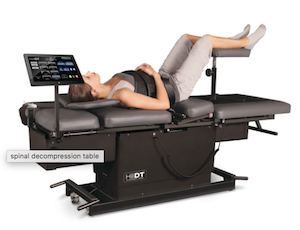
Spinal Decompression Table

Non-Surgical Spinal Decompression Therapy:

Spinal decompression therapy is a gentle, non-surgical treatment that relieves pressure on spinal discs, joints, and nerves using a motorized table. We use the advanced HillDT Decompression Table, which adapts in real time to your body for a safer, more comfortable experience. This therapy is ideal for conditions like herniated discs, pinched nerves, sciatica, disc degeneration, and chronic low back or neck pain.
Yoga Therapy

Yoga Therapy:

Targeted movements and breath work to enhance posture, increase flexibility, relieve muscle tension, alleviate stress, and restore balance to the central nervous system.
Postural Correction

Postural Correction:

Focused stretching and strengthening exercises designed to correct muscle compensation patterns, enhance posture alignment, and prevent future injuries.

Can Spinal Decompression Help a Disc Herniation?

If you’ve been diagnosed with a disc bulge or disc herniation, you may have been told that surgery or injections are your only options. In many cases, that isn’t true

At Boulder Sports Clinic, spinal decompression therapy is one of the non-surgical tools we may use as part of a comprehensive disc herniation treatment plan. Decompression is designed to gently reduce pressure on the affected disc and surrounding spinal nerves, which can help relieve pain and create a better environment for healing.
During spinal decompression, controlled traction is applied to the spine using a specialized table. This process can help reduce compressive forces that contribute to disc-related symptoms such as localized low back pain, pain that radiates into the hip or leg, numbness, or tingling.

Who Is a Good Candidate for Spinal Decompression?

Spinal decompression may be appropriate for patients with:
  • Disc bulges or herniations confirmed on imaging
  • Nerve-related symptoms such as sciatica or radiating leg pain
  • Pain that worsens with sitting, bending, or prolonged activity
  • Ongoing symptoms that have not responded to rest or traditional chiropractic or physical therapy.
Not every disc herniation is the same. Factors such as disc severity, spinal stability, overall movement quality, and activity level all play a role in determining whether decompression is appropriate.That’s why we don’t recommend spinal decompression in isolation or as a “one-size-fits-all” solution.

Spinal Decompression as Part of a Comprehensive Treatment Plan

When spinal decompression is recommended, it is typically combined with other treatments to address both pain relief and long-term recovery. Depending on your presentation, your plan may also include:
  • Physical therapy to improve strength, stability, and movement patterns
  • Chiropractic care to improve joint mobility and reduce mechanical stress
  • Manual therapy to address muscle tension and protective guarding
  • Targeted rehab exercises to reduce the risk of future flare-ups
This integrated approach helps ensure we’re not just reducing symptoms, but also correcting the underlying factors that contributed to the disc injury in the first place.

What to Expect at Your First Visit


Your first visit includes:

  • A detailed history and movement assessment
  • Neurological and movement assessment
  • Spine and hip evaluation
  • Identification of the source of nerve irritation
  • A clear, step-by-step treatment plan
You’ll leave knowing what’s wrong, why it’s happening, and how we’ll fix it.

When Should You Seek Treatment for a Disc Herniation?


We recommend scheduling an evaluation if:
  • Pain or numbness has lasted longer than 1 week
  • Pain is worsening or spreading into the arms or legs
  • Sitting, driving, or sleeping is difficult
  • You’ve had recurring episodes of back or neck pain
Early treatment often means faster recovery and fewer visits.

Schedule Disc Herniation Treatment in Boulder

You don’t have to live in fear of movement—or assume surgery is inevitable.
Schedule a disc herniation evaluation or injury screen at Boulder Sports Clinic and get a clear, conservative plan to relieve pain and restore confidence in movement.

Frequently Asked Questions About Disc Herniation Treatment

Do all disc herniations require surgery?

No. The vast majority of disc herniations improve with conservative, non-surgical care.

How long does it take to recover from a disc herniation?

Recovery varies, but many patients see significant improvement within weeks when nerve irritation and mechanics are addressed.

Do I need an MRI?

Imaging is only recommended when clinically necessary based on exam findings and symptoms. We can write you a prescription for MRI if needed.

Can I combine chiropractic care and physical therapy?

Yes. Combining services often leads to better outcomes and fewer recurrences.

Trusted Spine Care for Active Adults in Boulder


Boulder Sports Clinic has extensive experience helping active adults and athletes recover from disc herniations and return to work, training, and outdoor activities safely.
Whether your pain started suddenly or developed over time, our team is here to help you move forward—without fear.
We can help

Disc Herniation Treatment
with Boulder Sports Clinic

Book your Disc Herniation Treatment with Boulder Sports Clinic today and take the first step towards a pain-free life!

Lower Back Pain CTA